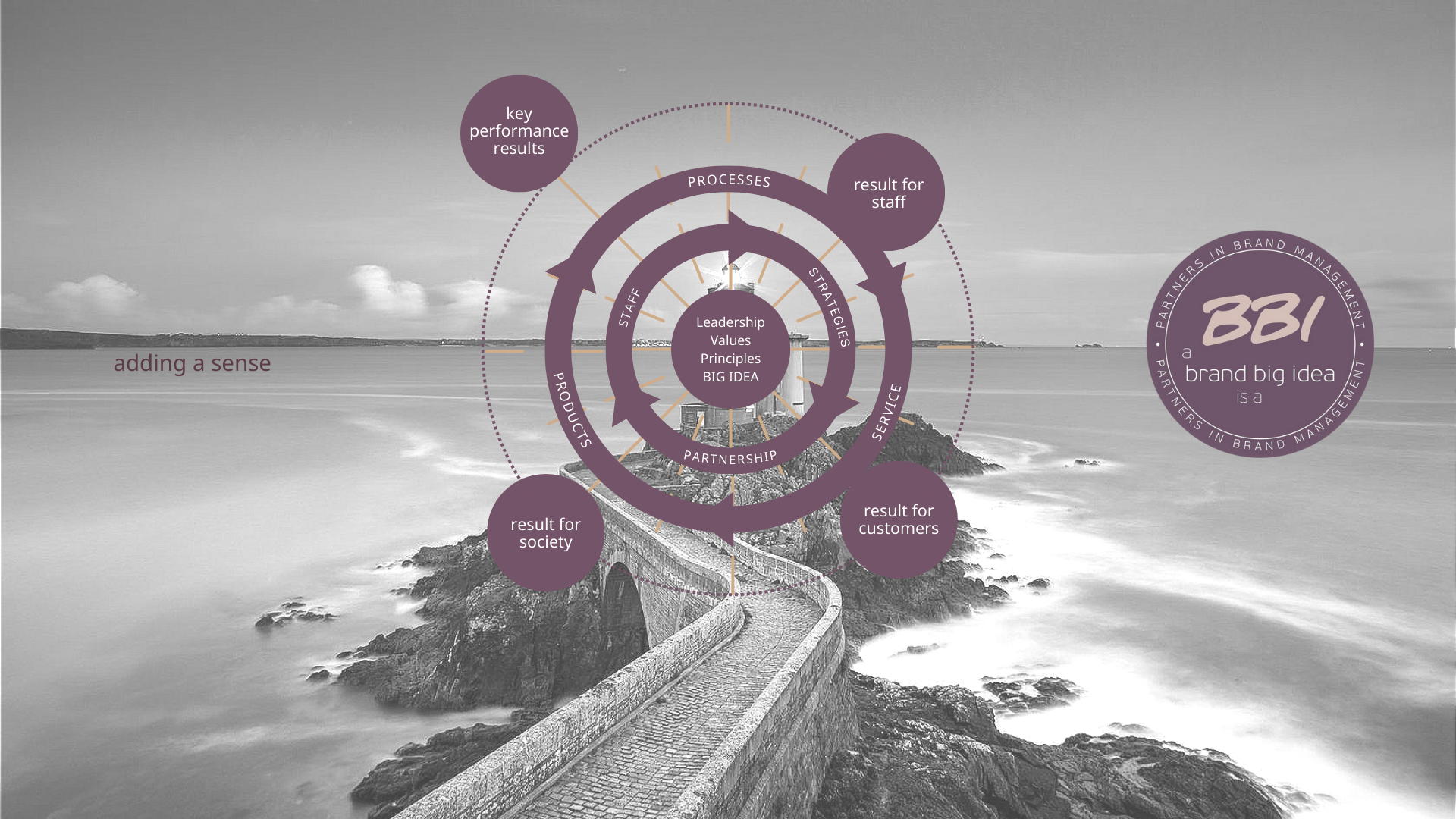
BBI FRAMEWORK: BRAND LEADERSHIP
A complete guide to definition and implementation. Why do some brands lead markets while others are forever playing catch-up?
A complete guide to definition and implementation
Why do some brands lead markets while others are forever playing catch-up?
This guide reveals the difference between brand management and true brand leadership – a process that creates market positions rather than merely maintaining them.
Author: Kateryna Cherepova, Co-Founder of BBI brandbigidea LinkedIn: Kateryna Cherepova
EXECUTIVE SUMMARY
Most companies believe they are practising brand leadership, whilst in reality, they are merely managing their brand. Brand leadership is the process by which a brand influences a group of people to achieve a common goal within a specific context.
Critical Difference
Brand management maintains positions. Brand leadership creates them.
KEY COMPONENTS OF BRAND LEADERSHIP
- Process: A continuous journey, not a static destination.
- Influence: The ability to shape decisions through expertise and trust.
- Group: A community of people with shared goals and values.
- Context: Adaptation to shifting market conditions and dynamics.
CONTENTS
- Defining Brand Leadership: Theoretical foundations and key components.
- The Four Pillars of Brand Leadership: Process, infuence, group, context.
- Core Components: Brand, group, influence, shared goals.
- Leadership vs Management: Critical differences in approach.
- The BBI Framework: Five Steps: Detailed implementation methodology.
- Application by Company Size: From start-ups to corporations.
- Common Mistakes: What to avoid during implementation.
- Implementation Checklist: A practical action plan.
- Measuring Effectiveness: Metrics and KPIs.
- Frequently Asked Questions: Answers to common queries.
1. DEFINING BRAND LEADERSHIP
Our definition of brand leadership is grounded in classic leadership theory. According to Peter Guy Northouse (2018), leadership is "a process whereby an individual influences a group of individuals to achieve a common goal".
The four essential components of classic leadership:
- It is a process (not a static position).
- It involves influence (not control).
- It occurs in a group setting.
- It implies the attainment of common goals.
The leadership process model by Randall B. Dunham and Jon Pierce (1989) adds a fifth element — the consideration of context, which is particularly crucial for brands operating in a volatile market environment.
ADAPTATION FOR BRANDS
BBI adapts these principles to the realm of branding, where instead of an individual, the leader becomes the brand, and the group is the target audience with shared needs and goals.
DEFINITION OF BRAND LEADERSHIP
Brand leadership is the process by which a brand influences a group of people to achieve a common goal/solve a problem within specific conditions (context).
2. THE FOUR PILLARS OF BRAND LEADERSHIP
PILLAR 1: PROCESS (NOT STATUS)
Brand leadership is not a destination but a continuous journey. This is a fundamental shift from the traditional mindset of a brand as something static.
"Consumers don't just want brands to be different and relevant; they want them to keep being different and relevant... Successful brands understand this and know they must constantly evolve, not stand still." — John Gerzema, Futurist
- Continuous Evolution: The brand constantly adapts to market changes and audience needs.
- Active Listening: Regular collection and analysis of customer feedback.
- Agile Adaptation: Rapid response to changes without losing core values.
- Trend Anticipation: A proactive approach to future industry shifts.
PILLAR 2: INFLUENCE (NOT CONTROL)
Brands do not hold power over consumers, but they can influence their decisions. This is a critical distinction: control compels, influence inspires.
Brands influence through:
- Genuine expertise and authority – deep knowledge in their field.
- Consistent problem-solving capabilities – proven results.
- Shared values and common interests – resonance with the audience.
- Demonstrated results and social proof – real case studies.
PILLAR 3: GROUP DYNAMICS
Brand leadership occurs within specific communities of people. Understanding this community is the foundation of successful leadership.
Brand community characteristics:
- Share common challenges or aspirations.
- Value similar outcomes or experiences.
- Trust the brand's guidance and expertise.
- Participate in mutual value creation.
PILLAR 4: CONTEXTUAL ADAPTATION
Every brand operates within unique circumstances. Successful leadership requires constant analysis and adaptation to the context.
- Market conditions and competitive landscape.
- Cultural and social environment.
- Technological opportunities and limitations.
- Regulatory and economic factors.
3. CORE COMPONENTS OF BRAND LEADERSHIP
COMPONENT 1: BRAND – THE LEADERSHIP ENTITY
The brand itself must embody leadership qualities. It is not merely a logo or a slogan, but a complete leadership entity with distinct characteristics.
Clarity of Purpose A clear answer to the question "Why do we exist?" is the bedrock of brand leadership. The purpose must be:
- Beyond Profit Motive: A deeper reason for existence that inspires.
- Values-Connnected: Aligned with the founder's/company's values.
- Market-Aligned: Meets the genuine needs of the audience.
- Inspiring and Memorable: Easily articulated and resonates with people.
COMPONENT 2: GROUP – THE INFLUENCED COMMUNITY
Defining the target audience requires deep, multi-dimensional understanding. It is not just demographics – it is a comprehensive psychological profile.
- Demographics: Age, income, geography, professional background.
- Psychographics: Core anxieties, aspirations, self-perception.
- Behavioural Patterns: How they research and make decisions.
- Values and Beliefs: Priorities and ethical considerations.
COMPONENT 3: INFLUENCE – THE LEADERSHIP MECHANISM
Four sources of authority:
- Expert Authority: Deep knowledge and proven capabilities in one's field.
- Referent Authority: Shared values and attractive qualities that create an emotional bond.
- Reward Authority: The ability to provide valuable benefits and solve problems.
- Legitimate Authority: Recognised position and credentials within the industry.
COMPONENT 4: SHARED GOALS – MUTUAL BENEFIT
System of mutual benefit:
- The brand achieves business goals (growth, profitability).
- Customers achieve personal/professional goals (problem resolution).
- Society benefits from the interaction (social responsibility).
- The environment and stakeholders receive value.
4. Brand Leadership vs Brand Management
This distinction is not academic. It determines whether you will lead your market or forever play catch-up.
| ASPECT | BRAND MANAGEMENT | BRAND LEADERSHIP |
|---|---|---|
| Focus | Maintaining existing brand elements | Creating influence and shared value |
| Approach | Defensive and operational | Proactive and visionary |
| Relationships | Transactional (buying-selling) | Transformational (partnership) |
| Timeframe | Short-term | Long-term with agility |
| Metrics | Awareness, recall | Influence, advocacy, shared goals |
| Brand Role | Product identifier | Driving force for change |
| Innovation | Incremental improvements | Revolutionary changes |
KEY TAKEAWAY
Brand management is a necessary function. Brand leadership is a strategic advantage. The most successful brands masterfully combine both approaches, but always lead from a position of leadership.
5. THE BBI FRAMEWORK: FIVE STEPS TO LEADERSHIP
The BBI Brand Leadership Framework is a systematic methodology for transforming from brand management to creating genuine market influence. The five steps represent a sequential process, each building upon the previous one.
BRAND AS A BIG IDEA
The Big Idea functions within the organisation as a core around which strategy, behaviour, actions, and communications are built. These are not just pretty words for a website – this is a practical compass for every decision. Such an approach helps create a mental monopoly – an undisputed competitive advantage.
STEP 1: PURPOSE FORMATION ('WHY?')
What happens: A systematic 3-week process of discovering and formulating your brand's true purpose – the fundamental reason for existence beyond profit.
WHY THIS IS CRITICAL: Without a clear "why", all other efforts lose direction and authenticity. Purpose is not a marketing slogan, but a strategic foundation.
Weekly Purpose Formation Process:
- Week 1: Archeology of Founder Motivation. Deep sessions with the leadership team to uncover genuine driving forces. Not creating nice mission statements, but discovering authentic motivations.
- Week 2: Market Needs Validation. 15-20 interviews with customers and market analysis to verify the alignment of motivations with genuine market needs.
- Week 3: Integration and Testing. Formulating a clear purpose (< 25 words), testing with stakeholders, and developing a decision-making system.
Outcome:
- Purpose Statement: Clear formulation < 25 words.
- Value System: 3-5 core values with behavioural indicators.
- Strategic Decision Framework: Criteria for decisions.
- Integration Plan: Roadmap for embedding purpose into the organisation.
STEP 2: CONTEXT ANALYSIS – READING THE MARKET LANDSCAPE
What happens: Systematic analysis of external forces to identify positioning opportunities and dynamics affecting leadership goals.
WHY THIS IS IMPORTANT: Companies that systematically analyze market context are 40% more likely to anticipate competitive actions and 60% faster at spotting new opportunities.
Analysis Frameworks:
- PESTLE Scanning:
- Political – legislation, regulation, stability
- Economic – inflation, exchange rates, purchasing power
- Social – demographic changes, cultural trends, values
- Technological – innovation, automation, digital
- Legal – legislation, licensing, data protection
- Environmental – sustainability, climate, resources
- Porter's Five Forces: Threat of new entrants, bargaining power of suppliers, bargaining power of buyers, threat of substitutes, competitive rivalry.
- White Space Mapping: Identifying unoccupied niches and opportunities for leadership without direct competition.
STEP 3: AUDIENCE UNDERSTANDING – KNOW YOUR TRIBE
What happens: Comprehensive research into the psychology, motivation, and decision-making models of the audience.
WHY THIS CHANGES THE GAME: Understanding audience psychology allows for genuine influence rather than manipulative marketing. This is the foundation for building long-term relationships and loyalty.
Tools:
- 15-20 in-depth interviews (One-on-one conversations with ideal clients).
- Values analysis (What truly matters to your audience).
- Customer journey mapping (Full path from awareness to loyalty).
Psychographic profile includes:
- Jobs to be done: What "jobs" are customers "hiring" your product to do.
- Pains and Gains: What troubles them and what they aspire to.
- Decision-Making System: How they evaluate options.
- Information Sources: Where they seek information.
- Social Dynamics: Influence of peers on decisions.
- Influence Triggers: What prompts action.
- Authority and Trust: Whom do they trust.
STEP 4: STRATEGIC POSITIONING – FIND THE SWEET SPOT
Analysis of the Venn diagram to determine the optimal position where customer needs meet your strengths in the absence of competitors.
- Circle 1: Consumer Needs – What truly matters to your target audience?
- Circle 2: Your Brand Strengths – In what ways are you truly exceptional?
- Circle 3: Competitor Advantages – Where do competitors already dominate?
THE WINNING ZONE
Intersection of Circles 1 and 2 WITHOUT Circle 3
Criteria for Strong Positioning:
- Relevance – matters to the target audience
- Differentiation – clearly distinct from competitors
- Credibility – you can deliver it
- Defensibility – hard to copy
- Profitability – creates economic value
STEP 5: INFLUENCE ARCHITECTURE – CEMENTING AUTHORITY
Systematic development of proof points and value propositions that turn positioning into real market influence.
Value Pyramid (4 Levels):
- Level 4: Social Impact – How does your brand make the world better?
- Level 3: Life-Changing Benefits – How do you transform clients' businesses?
- Level 2: Emotional Benefits – How do clients feel interacting with you?
- Level 1: Functional Benefits – What specifically does your product do?
6. APPLICATION BY COMPANY SIZE
The BBI framework adapts to different stages of company development. Each organisation size has its unique opportunities and challenges.
FOR START-UPS (0-50 EMPLOYEES)
Strategic Approach: Visionary Leadership Start-ups have a unique opportunity to create new categories instead of competing in existing ones.
- Positioning as Pioneers: Creating a new product/service category.
- Founder Personal Branding: Active presence of the founder in media and social networks.
- Movement Creation: Building a community around the brand's purpose.
- Agile Adaptation: Using feedback for rapid iterations.
Tip for Start-ups: Invest 70% of time in Purpose Formation (Step 1) and Audience Understanding (Step 3). This creates a solid foundation for scaling.
FOR SCALING COMPANIES (50-500 EMPLOYEES)
Scaling Priorities:
- Systematic Growth – geographic expansion and market segmentation.
- Brand Architecture – consistency across product lines and sub-brands.
- Partnership Ecosystem – strategic alliances to expand influence.
- Employer Brand – attracting and retaining talent.
- Operational Excellence – processes to maintain quality during growth.
FOR ENTERPRISES (500+ EMPLOYEES)
Strategic Approach: Market Orchestration Large companies have the resources and influence to shape entire industries.
- Setting market standards and regulations.
- Creating platform strategies and ecosystems.
- Massive investments in R&D and disruptive innovations.
7. COMMON MISTAKES AND HOW TO AVOID THEM
Understanding typical errors is just as important as knowing the right steps.
MISTAKE 1: CONFUSING MANAGEMENT WITH LEADERSHIP
Danger Signs:
- Emphasis on brand consistency over evolution.
- Risk avoidance in strategic decisions.
- Metrics focused on awareness rather than influence.
- Lack of discussion about the industry's future.
- Reactive approach to competitive actions.
SOLUTION: Shift to a leadership mindset with shared goals and constant adaptation. Audit the last 10 strategic decisions: how many were proactive vs reactive?
MISTAKE 2: WEAK PURPOSE FOUNDATION
Warning Signals:
- Purpose statement sounds generic and could belong to any company.
- Leadership team cannot consistently articulate "why".
- Decisions often do not align with the stated purpose.
- Purpose is mentioned only in presentations, not in daily decisions.
SOLUTION: Investment in deep work on purpose that connects founder values with real market needs. Authenticity Test: Are you ready to refuse a profitable opportunity if it contradicts your purpose?
MISTAKE 3: IGNORING CONTEXT DYNAMICS
Symptoms:
- Positioning unchanged for 3+ years despite market evolution.
- Unexpected blows from new competitors or technologies.
- Customer needs change, but brand messages remain static.
SOLUTION: Quarterly review of market trends and annual full positioning audit. Constant monitoring of competitive moves.
8. IMPLEMENTATION CHECKLIST
Use this practical checklist for the systematic implementation of the BBI Brand Leadership Framework in your organisation.
PHASE 1: PREPARATION
- [ ] Define implementation team (maximum 5 people)
- [ ] Appoint project lead with executive authority
- [ ] Block dedicated time (3-4 months)
- [ ] Gather necessary data: financials, research, competitors
- [ ] Establish progress tracking system
- [ ] Communicate plan to all key stakeholders
- [ ] Define budget for research and implementation
PHASE 2: EXECUTING THE FIVE STEPS
Step 1: Purpose Formation
- [ ] Conduct deep interviews with founders/leadership
- [ ] Conduct 15-20 interviews with customers
- [ ] Formulate clear purpose (< 25 words)
- [ ] Test purpose with stakeholders
- [ ] Develop purpose integration plan
Step 2: Context Analysis
- [ ] Conduct PESTLE analysis
- [ ] Analyse Porter's Five Forces
- [ ] Identify white space opportunities
- [ ] Establish environment monitoring system
Step 3: Audience Understanding
- [ ] Conduct 15-20 in-depth interviews
- [ ] Create customer journey map
- [ ] Develop detailed psychographic profile
Step 4: Strategic Positioning
- [ ] Identify the winning zone (sweet spot)
- [ ] Develop positioning statement and key messages
- [ ] Prepare implementation roadmap
Step 5: Influence Architecture
- [ ] Collect proofs (4 types: process, product, third-party, behavioural)
- [ ] Develop value pyramid (4 levels)
- [ ] Develop content strategy and thought leadership plan
PHASE 3: INTEGRATION AND SCALING
- [ ] Create brand book and communication guidelines
- [ ] Conduct training for the team
- [ ] Update digital presence (website, social media)
- [ ] Set KPIs and dashboard for tracking
- [ ] Schedule quarterly reviews
ESTIMATED TIMELINE:
- Month 1: Preparation + Step 1 (Purpose Formation)
- Month 2: Step 2 (Context Analysis) + Step 3 (Audience)
- Month 3: Step 4 (Positioning) + Step 5 (Influence)
- Month 4: Integration, training, launch
- Months 5-6: Measurement, optimisation, scaling
9. MEASURING BRAND LEADERSHIP EFFECTIVENESS
Track these key indicators to measure progress and optimise strategy.
| CATEGORY | WHAT WE MEASURE | SPECIFIC METRICS |
|---|---|---|
| Thought Leadership | Influence on industry conversations | • Mentions in niche media • Invitations to speak • Citations in publications |
| Market Influence | Brand market influence | • Share of voice • Market share growth • Competitive reactions |
| Audience Impact | Impact on audience | • Net Promoter Score (NPS) • Customer Lifetime Value • Retention rate |
| Shared Goals | Achievement of shared goals | • Customer success stories • Social impact • Community engagement |
MEASUREMENT TIMEFRAMES
0-3 Months: Establishing Baselines
- Primary data from surveys
- Initial brand awareness level
- Competitive landscape benchmark
3-6 Months: First Thought Leadership Signals
- Growth in media mentions
- Beginning of speaking invitations
- First changes in competitor positioning
6-12 Months: Measuring Market Influence
- NPS and customer satisfaction
- Growth in CLV and LTV
- CAC (Customer Acquisition Cost)
12+ Months: Evaluating Leadership Positions
- Recognition as a thought leader
- AI Search Visibility (ChatGPT, Claude, Perplexity)
- Share of voice in industry conversations
10. FREQUENTLY ASKED QUESTIONS
How long does it take to see results? Brand leadership is a marathon, not a sprint. Expect initial results at 0-3 months. Noticeable market influence appears at 3-6 months. Brand-level results are visible at 6-12 months. True recognition as an industry leader – after 12+ months. Tip: Do not give up after 3 months if you don't see results – collect and analyse interim data.
Is the framework suitable for small businesses? Absolutely! Small businesses often have advantages in implementing brand leadership:
- Authenticity – direct communication with the founder
- Agility – rapid adaptation to changes
- Focus – narrow audience, deeper impact
- Speed – faster decisions without bureaucracy
How to measure ROI from brand leadership?
- Thought Leadership Metrics: Visibility in specialized AI systems, number of invitations and speeches, citations in media.
- Influence Metrics: NPS 50+, Share of voice, organic traffic growth.
- Impact Metrics: Revenue growth, customer success stories, organic word-of-mouth.
CONCLUSIONS AND NEXT STEPS
Conclusion 1
Brand leadership is a process, not a state. Constant development and adaptation to context are mandatory for maintaining leadership positions.
Conclusion 2
The Big Idea and authenticity are not just 'nice to have', they are key factors for success and differentiation from competitors.
Conclusion 3
Deep understanding of the audience allows for creating genuine influence instead of manipulative marketing, which builds long-term loyalty.
Conclusion 4
Focus on mutual benefit guarantees sustainable growth – customer success automatically leads to brand success, rather than the other way around.
Conclusion 5
BBI's systematic approach transforms vague ambitions into concrete market results through a step-by-step framework and progress measurement.
NEXT STEPS
Ready to transform your brand into a true market leader? Contact us – we will help you traverse this path together, using proven methodology and support at every step.
Contact BBI
BBI BRANDBIGIDEA Website: www.caminoaespana.eu/brand-hub Email: partner@brandbigidea.com
© 2026 BBI brandbigidea. All rights reserved. Reproduction without reference to the BBI Brand Leadership Framework is prohibited.